Rediscovering Yourself After Trauma: When Survival No Longer Defines You
Intro:
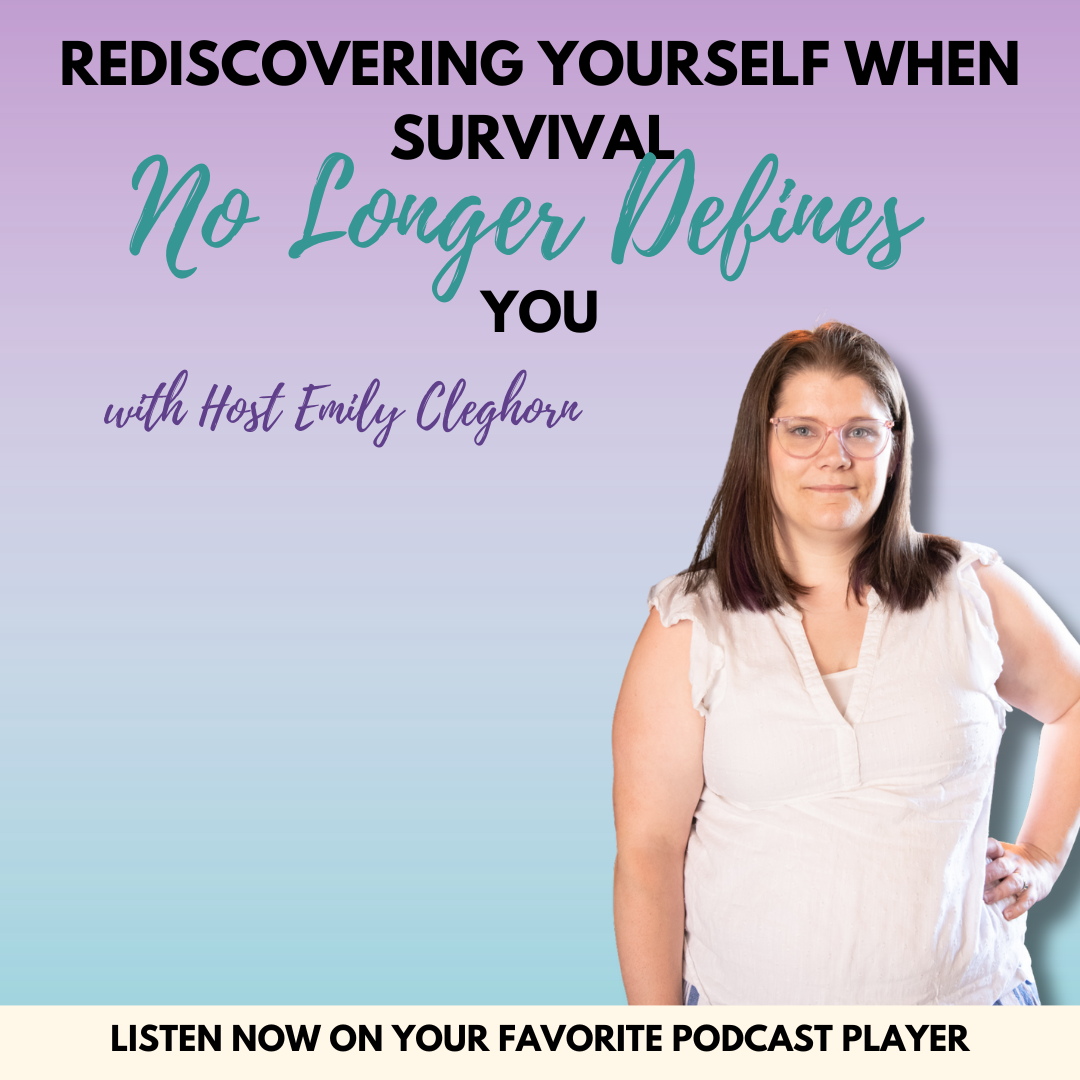
If you've spent years surviving, you may wonder who you are when the crisis finally begins to settle. For mothers healing from trauma, recovery isn't just about managing triggers; it's about rediscovering your identity. In this blog recap of Mamahood After Trauma, Emily Cleghorn shares how survival shapes our sense of self and offers practical steps to reconnect with the person you were always meant to be.
Understanding Survival Identity
Survival identity is the set of roles, behaviors, and beliefs you adopt to navigate and endure trauma. For many, these patterns begin in childhood and become so ingrained that they feel like your true self.
Common survival identities include:
The caretaker who handles everything for everyone else.
The peacekeeper who avoids conflict at all costs.
The planner who always stays prepared to prevent chaos.
The strong one who never asks for help.
Why does this happen?
Trauma, especially in formative years, forces you to adapt for safety. These adaptations are not flaws; they are strengths that got you through. But what happens when you’re no longer in constant crisis? When the chaos starts to quiet?
Key Insight:
Survival identities are not permanent. They served a purpose, but they are not the sum total of who you are.
The Discomfort of the In-Between
Healing is not a straight line.
Many expect that once the crisis is over, freedom and joy will rush in. But the reality is often a confusing, uncomfortable middle space:
You’re no longer the person you had to be to survive.
You haven’t yet met the person you’re becoming.
Old interests, relationships, and routines may no longer fit.
You may feel lost, unmotivated, or even grieve your old self.
Emily’s Reflection:
“I didn’t know who I was without those huge, heartbreaking, gut-wrenching things driving the bus. That scared the ever-loving snot out of me.”
Expert Advice:
Normalize the discomfort. This is a sign of growth, not failure.
Allow yourself to grieve. Letting go of survival identities can feel like losing a part of yourself.
Be patient. Identity reconstruction is a process, not an event.
Motherhood and Identity Reconstruction
Motherhood alone is a profound identity shift. Add trauma recovery, and the process becomes even more layered.
Unique challenges for mothers healing from trauma:
Double transformation: You’re raising children and re-raising yourself.
Boundary setting: Learning what healthy boundaries look like for you and modeling them for your kids.
Self-compassion: Giving yourself the care and understanding you may have missed in your own childhood.
Emily’s Wisdom:
“You’re not just raising children; you’re also raising yourself in many ways. You’re learning what safety feels like. You’re learning what boundaries look like. You’re learning how to give yourself the compassion you didn’t always receive.”
Actionable Insight:
Acknowledge the complexity. It’s okay if this feels overwhelming.
Celebrate small wins. Every step toward self-awareness is a victory for you and your family.
Actionable Steps to Reclaim Your Identity
Here are some powerful questions and practices to guide your journey:
1- Reflect on Who You Were Before Survival Took Over
- Ask yourself:
Who was I before survival became my identity?
What did I love? What brought me joy?
What dreams or interests did I set aside?
- If you don’t know, that’s okay.
Trauma can obscure early memories. Start with small glimpses—favorite childhood activities, moments of peace, or times you felt most yourself.
2- Identify Lost Parts of Yourself
- Journaling Prompt:
What parts of myself have I lost connection with?
What parts of me are asking to be seen again?
- Action Step:
Make a list of qualities, hobbies, or values you miss.
Choose one to gently reintroduce into your life.
3- Embrace the Messy Middle
- Practice self-compassion:
Remind yourself: “I am allowed to be a work in progress.”
Speak to yourself as you would to a dear friend.
- Allow for experimentation:
Try new things without pressure to “get it right.”
Notice what feels energizing or peaceful.
4- Build a Supportive Environment
- Connect with others:
Join communities (like Emily’s Rising Room) where you can share your journey.
Seek out friends, mentors, or professionals who honor your process.
- Set boundaries:
Protect your healing time and energy.
Say no to roles or relationships that reinforce old survival patterns.
Sustainable Healing Requires Support
Healing should never be a privilege. At the same time, sustainable healing requires sustainable support.
Ways to support your healing journey:
Engage with the community: Listen, subscribe, share, and review the podcast.
Consider contributing: If you’re able, support the podcast through “Buy Me a Coffee” to help keep these conversations accessible.
Seek professional help: Therapy, coaching, or support groups can provide structure and accountability.
Remember:
You don’t have to do this work alone. Healing is a collective journey.
Resources for Your Journey
Take Emily Cleghorn’s Free Quiz:
Find Your Next Step to Calm and Healing: Discover where you are in your healing journey and what your next best step looks like.
Take the quiz by clicking here.
Join The Rising Room:
A healing community for mothers: Find encouragement, deeper conversations, practical resources, and reflection tools as you navigate trauma recovery and motherhood.
Join The Rising Room by clicking here.
Additional Tips:
Journaling: Regular reflection helps track your growth and clarify your evolving identity.
Mindfulness Practices: Ground yourself in the present to reduce anxiety about the future.
Creative Expression: Art, music, or movement can reconnect you with lost parts of yourself.
Final Thoughts: You Are Not Alone
Rebuilding your identity after trauma is courageous, messy, and deeply worthwhile. You are not just surviving; you are rediscovering who you are. Every step you take toward self-discovery is a gift to yourself and your children.
Action Steps:
Reflect on the questions above.
Take the free quiz to find your next step.
Join a supportive community.
Celebrate your progress, no matter how small.
Follow the podcast so new episodes land in your feed each week.
Mend the past so you can mama in peace.
Thank you for subscribing!
Have a great day!
Support the Podcast
Become a Mamahood After Trauma supporter through Buy Me a Coffee. Your support helps us continue creating free podcast episodes and resources for mamas healing from trauma.
Supporters receive a shout-out on the podcast!