5 Practical Ways to Support Your Toddler's Communication
Tip 1: Introduce Baby Sign Language, But Keep It Simple
Why It Matters
Before toddlers can speak, they often experience frustration when they can’t express their needs. Baby sign language bridges this gap, reducing meltdowns and empowering your child to communicate basic wants.
How to Implement
-
Start Small: Choose a few essential signs, such as “more,” “all done,” “milk,” and “help.” Don’t overwhelm yourself or your child with too many at once.
-
Consistency Is Key: Use the signs every time you say the word. For example, sign “more” when offering another bite at mealtime.
-
Model, Don’t Demand: Demonstrate the sign and say the word, but don’t force your child to imitate. Celebrate any attempt to communicate, whether it’s a sign, a sound, or a gesture.
Expert Insight
Jesse emphasizes that even a handful of signs can make a significant difference in reducing frustration for both parent and child.
Tip 2: Set Realistic Expectations for Toddler Communication
Why It Matters
Unrealistic expectations can lead to unnecessary stress and self-criticism. Understanding what’s typical for your child’s age helps you respond with patience and empathy.
What’s Normal?
-
At age two, it’s typical to understand only about 50% of what your toddler says.
-
Toddlers are still learning how to form words and sentences. Mispronunciations and jumbled phrases are part of the process.
Actionable Advice
-
Remind Yourself: If you don’t understand your toddler half the time, you’re not failing. They’re right on track.
-
Celebrate Attempts: Focus on effort, not perfection. Every attempt to communicate is progress.
Expert Insight
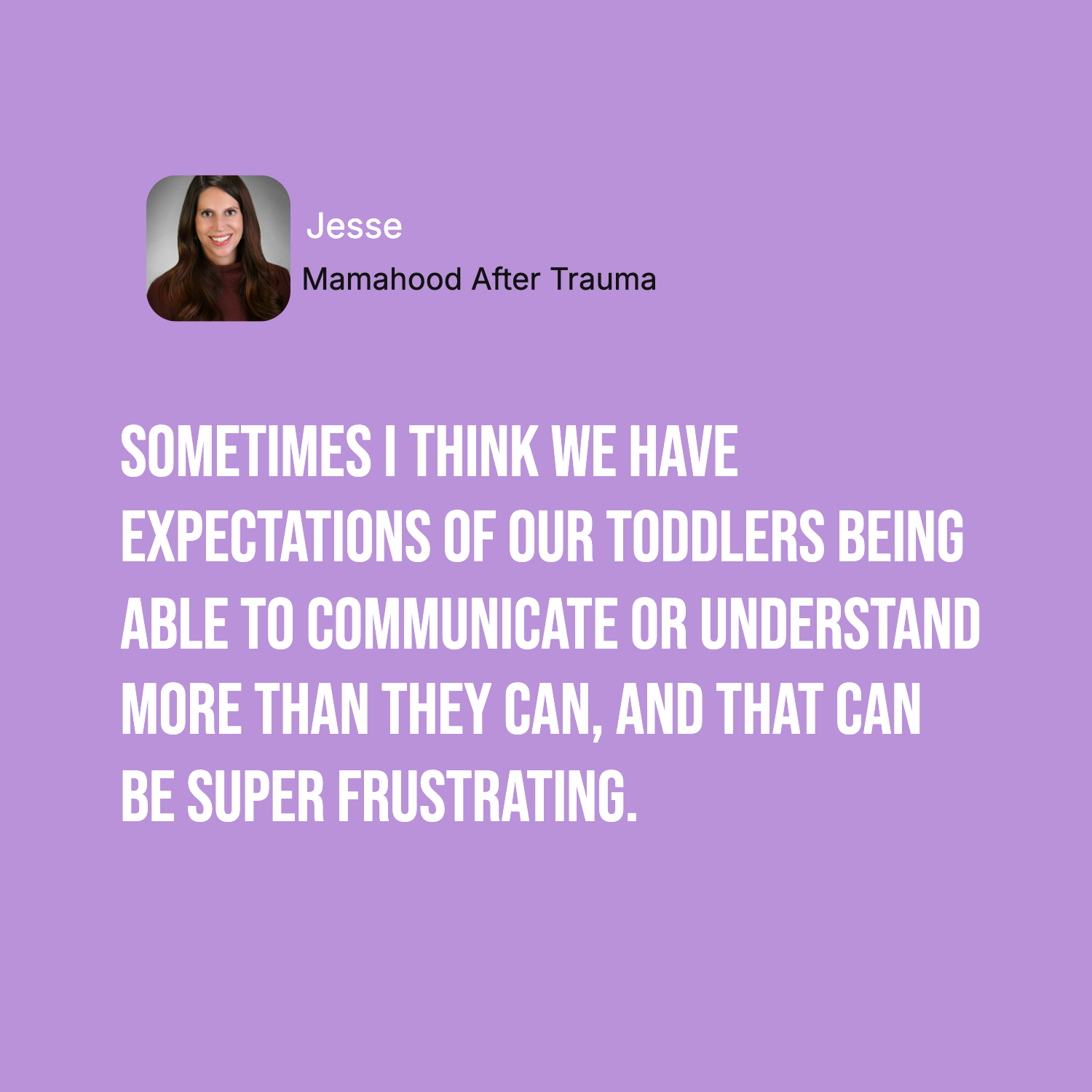
Jesse notes, “Sometimes parents expect their toddlers to understand or say more than they actually can, which leads to frustration. It’s important to remind yourself that it’s okay if your toddler isn’t communicating perfectly yet.”
Tip 3: Model Language with Short, Simple Phrases
Why It Matters
Toddlers learn language best when it’s presented in manageable chunks. Overly complex sentences can overwhelm them, while short phrases are easier to imitate and understand.
How to Implement
-
Use Two- or Three-Word Phrases: During daily routines, say things like “turn on water,” “all done,” or “take out bubbles.”
-
Be Intentional: Focus on the words your child is most likely to need or use in the moment.
-
Repeat Often: Repetition helps toddlers internalize new vocabulary.
Expert Insight
Jesse recommends, “Modeling language and then giving them space to use it when they’re ready is one of my favorite tips.”
Tip 4: Avoid Baby Talk and Use Real Words, Even Big Ones
Why It Matters
While “baby talk” can be cute, it may delay proper pronunciation and vocabulary development. Using correct words, even complex ones, sets a strong foundation for language skills.
How to Implement
-
Use Full Words: Say “water” instead of “wawa” and “excavator” instead of “diggy.”
-
Don’t Underestimate Your Child: Toddlers are capable of learning big words, especially when they’re interested, such as the names of vehicles, animals, or favourite foods.
-
Model Correct Pronunciation: If your child says a word incorrectly, repeat it back correctly in a positive way.
Expert Insight
Jesse shares, “If you say words incorrectly, your toddler will learn them that way too, and later you’ll have to correct them. So, I recommend always using the full, correct words, even if they seem tricky.”
Tip 5: Give Your Toddler Time to Process and Respond
Why It Matters
Toddlers need extra time to process language and formulate a response. Rushing to fill silences can rob them of the opportunity to practice and build confidence.
How to Implement
-
Pause After Speaking: After modeling a phrase, wait 5–10 seconds before prompting again.
-
Embrace the Silence: It may feel awkward, but this “wait time” is when learning happens.
-
Encourage, Don’t Pressure: If your child doesn’t respond, simply model the word again and move on.
Practical Example
If you’re playing with a toy car, say, “Ready, set…” and pause. If your toddler says “go,” celebrate! If not, say it yourself and keep playing.
Expert Insight
Jesse likens this to a teacher waiting for a student to answer: “That awkward silence can feel uncomfortable for adults, but for toddlers, it’s an important moment to build confidence and language skills.”