The Most Powerful Journey from Binge Eating to Healing After Trauma
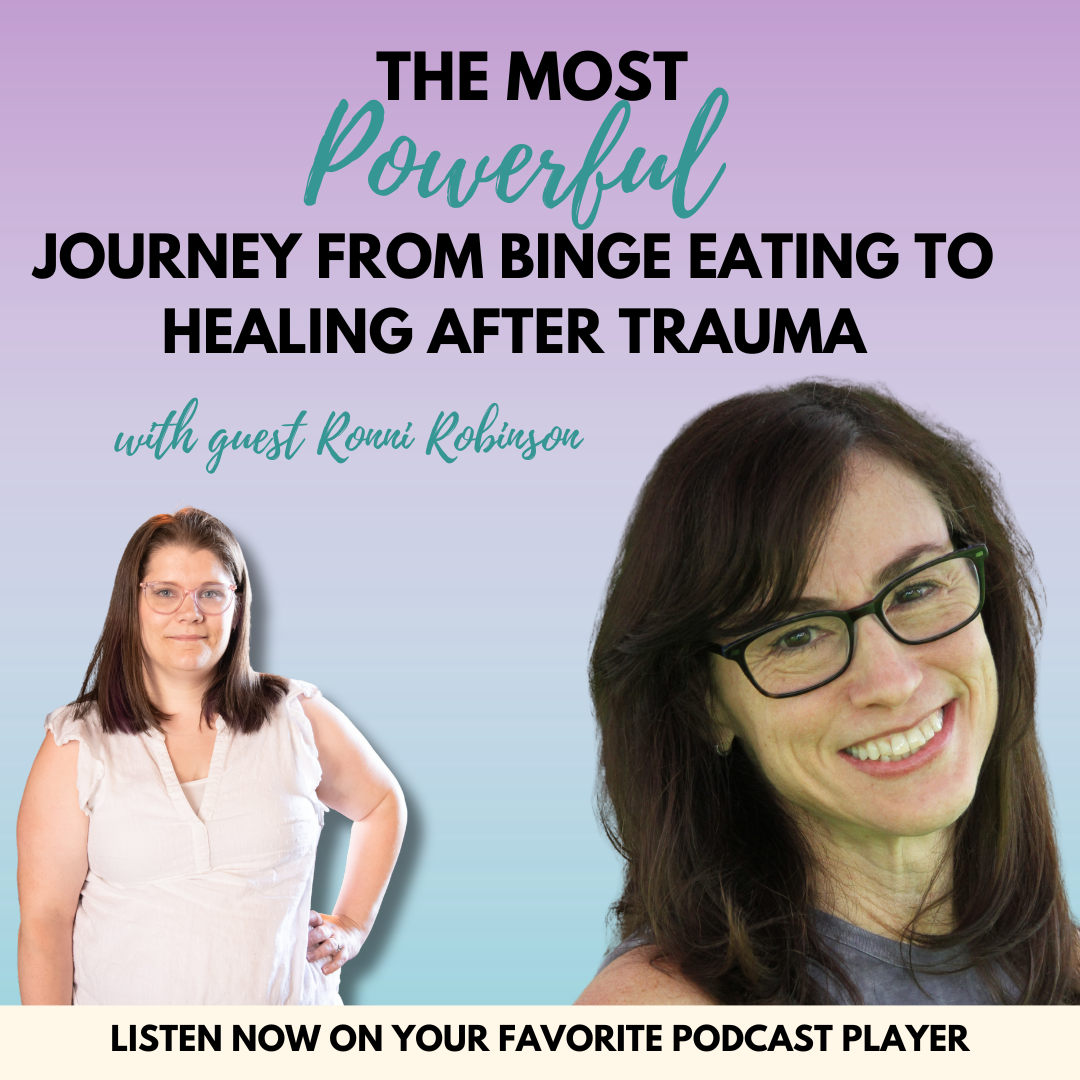
In this episode, host Emily speaks with Ronnie Robinson, an eating disorder recovery coach and author of Out of the Pantry, about the connection between trauma, emotional neglect, and binge eating disorder, offering hope, practical guidance, and insights for mothers facing similar struggles.
Episode Summary
Binge eating disorder is often rooted in childhood trauma and emotional neglect. Recognizing the signs is the first step toward healing. To learn more about what those signs are and what recovery could look like, explore these insights shared by Emily and Ronnie.
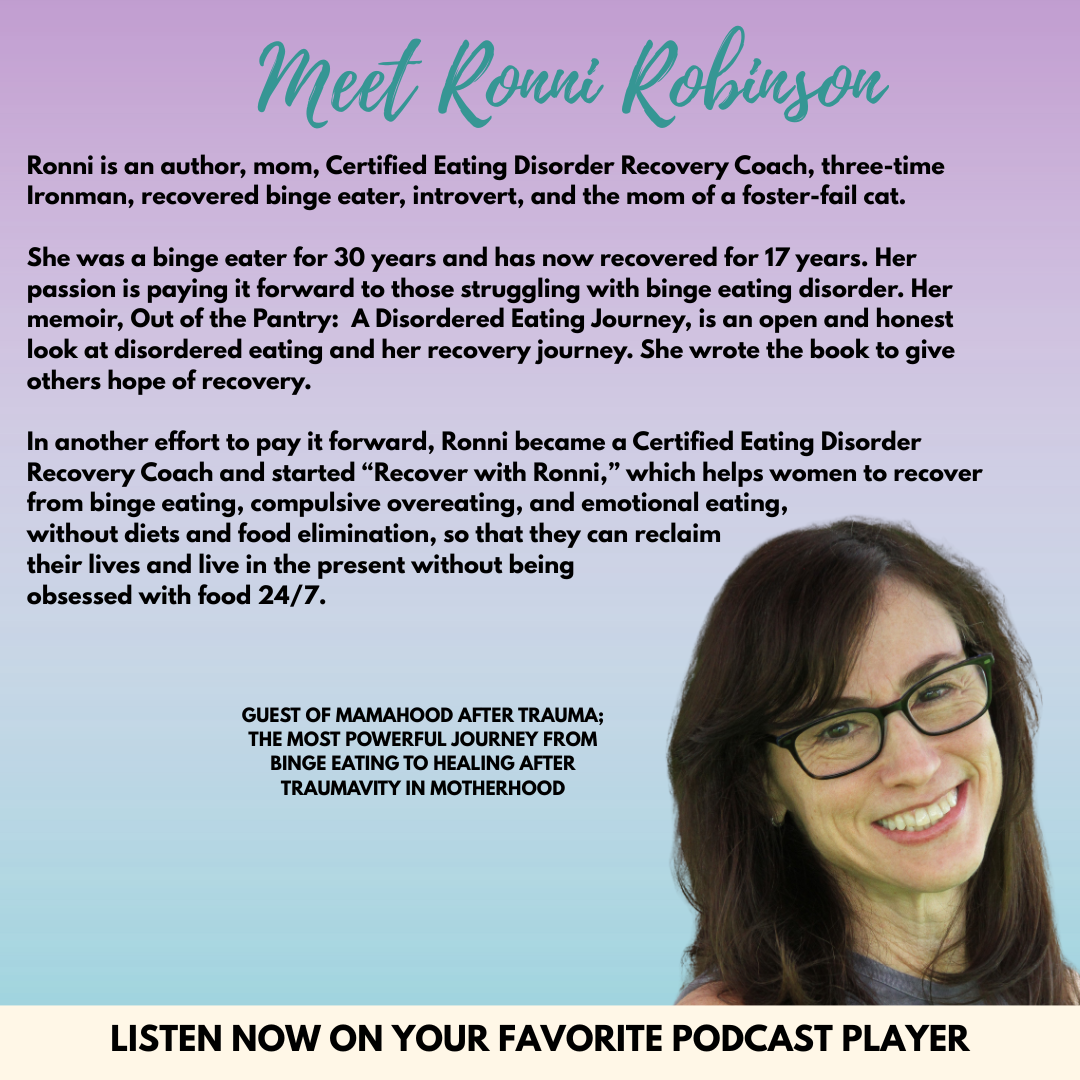
Table of Contents
Understanding the Link: Trauma and Binge Eating Disorder
The Emotional Roots of Binge Eating
Recognizing the Signs: Is Binge Eating a Problem for You?
Red Flags and Patterns
The Turning Point: Admitting the Problem and Seeking Help
Ronnie’s Moment of Realization
Healing in Practice: Tools and Strategies for Recovery
Therapy and Self-Reflection
Building a Support Network
Find Your Community
Reframing Food and Self-Care
Ditch Diet Culture
Practice Mindful Eating
Resources and Next Steps
Ronnie’s Book: Out of the Pantry
Final Thoughts: Healing Out Loud
Understanding the Link: Trauma and Binge Eating Disorder
Ronnie’s story began in childhood, where emotional neglect and a lack of nurturing set the stage for her development of an eating disorder at just nine years old. Her mother’s secretive behavior around food became a symbol of deeper emotional deprivation, shown in behaviours like hiding cookies.
Key Insight:
Binge eating disorder is rarely about food alone. It often emerges as a coping mechanism for unmet emotional needs, unresolved trauma, or chronic stress. Many mothers, especially those who grew up in emotionally distant or dysfunctional families, may unconsciously use food to self-soothe, fill emotional voids, or manage overwhelming feelings.
Recognizing the Signs: Is Binge Eating a Problem for You?
Red Flags and Patterns:
Ronnie describes classic signs of binge eating disorder, which are often overlooked or misunderstood:
Secretive Eating: Consuming large amounts of food alone, often in secret.
Loss of Control: Feeling unable to stop eating, even when physically uncomfortable.
Emotional Aftermath: Experiencing shame, guilt, and negative self-talk after a binge.
Cyclical Promises: Vowing to “do better” tomorrow, only to repeat the cycle.
Dieting History: Repeatedly trying and failing at restrictive diets, leading to feelings of failure and frustration.
Expert Advice:
If you recognize these patterns in yourself, know that you are not alone. Binge eating disorder is a mental health issue, not a personal failing. The cycle of restriction and bingeing is fueled by both emotional and physiological factors. Diets often exacerbate the problem by making certain foods feel forbidden and more desirable.
The Turning Point: Admitting the Problem and Seeking Help
Ronnie’s Moment of Realization:
Ronnie’s healing journey began with a moment of clarity–hearing the term “compulsive overeating” and realizing it described her experience. This led her to Overeaters Anonymous, where she found community, understanding, and the language to describe her struggle.
Actionable Steps:
- Acknowledge the Issue:
The first and most crucial step is admitting that your relationship with food feels out of control.
Recognize that feeling powerless is not a sign of weakness, but a signal that deeper healing is needed.
- Commit to Recovery for Yourself:
Recovery should be motivated by self-compassion and a desire to heal, not by external pressures or weight loss goals.
Focus on addressing the underlying emotional wounds, not just the symptoms.
- Seek Specialized Support:
Look for therapists or coaches who specialize in eating disorders and trauma.
Consider joining support groups like Overeaters Anonymous, where you can connect with others who understand your journey.
Healing in Practice: Tools and Strategies for Recovery
Therapy and Self-Reflection:
Ronnie emphasizes the importance of therapy, particularly with professionals who understand the complexities of eating disorders and trauma. Through therapy, she realized that her “normal” childhood was, in fact, marked by emotional neglect and dysfunction.
Practical Tips:
Journaling:
Start a private journal or an anonymous blog to process your thoughts and feelings. Writing can help you identify patterns and triggers.
Identify Emotional Triggers:
Notice when you feel the urge to binge. Are you bored, lonely, frustrated, or even celebrating? Understanding your emotional landscape is key to breaking the cycle.
Challenge Negative Self-Talk:
After a binge, practice self-compassion. Replace “What’s wrong with me?” with “What am I feeling right now, and what do I need?”
Building a Support Network
Find Your Community:
Recovery is not a solo journey. Seek out support groups, online communities, or trusted friends who can offer empathy and encouragement.
Professional Guidance:
Eating disorder recovery coaches, like Ronnie, can provide personalized strategies and accountability.
Reframing Food and Self-Care
Ditch Diet Culture:
Understand that restrictive diets often backfire. Focus on nourishing your body and honoring your hunger cues.
Practice Mindful Eating:
Slow down, savor your food, and check in with your body’s signals of hunger and fullness.
Final Thoughts: Healing Out Loud
Breaking the cycle of trauma and eating disorders is possible. It begins with self-awareness, compassion, and the courage to seek support from others. Whether you’re a mother healing for yourself or for your children, remember that recovery is a journey–one that you don’t have to walk alone.
Key Takeaways
Binge eating disorder is often rooted in childhood trauma and emotional neglect.
Recognizing the signs—secretive eating, loss of control, shame—is the first step toward healing.
Recovery is possible with specialized support, self-compassion, and community.
Therapy, journaling, and mindful eating are powerful tools for breaking the cycle.
You are not alone—reach out, connect, and heal out loud.
Resources and Next Steps
For those not yet ready to reach out for help, Ronnie’s memoir offers a relatable, honest account of her recovery journey. Many readers find comfort and hope in seeing their own experiences reflected in her story.
Available on Amazon: Paperback, Kindle, and Audiobook Formats.
Subscribe to “Mamahood After Trauma” for more stories, tools, and support. Mend the past so you can mama in peace.
Thank you for subscribing!
Have a great day!