The Most Powerful Survival Strategy Mothers Can Transform for True Peace


The Most Powerful Survival Strategy Mothers Can Transform for True Peace

Introduction
Welcome to a new era of healing, honesty, and hope. In this blog of Mamahood After Trauma, host Emily Cleghorn explores the impact trauma can have on motherhood, especially through hyper-awareness and self-blame. With warmth and vulnerability, she offers encouragement and practical insight for mothers who are seeking healing and hoping to break generational cycles.

Introducing the Peace Pack: Practical Support for Healing

Check out Emily’s Peace Pack- a monthly, trauma-informed tool for mothers. Here’s how it works:

  • Tangible Tools:
    • Each month, subscribers receive a carefully curated tool or resource delivered to their mailbox. These are not generic self-care items, but trauma-informed supports that address the unique needs of mothers healing from trauma.

  • Ongoing encouragement:
    • The Peace Pack is more than a product; it’s a monthly reminder that you are not alone and that healing is a journey, not a destination.

  • Private Community Access:
    • Subscribers gain entry to a private Patreon community, a safe supportive space for sharing, learning, and connecting with other mothers who understand the path you’re on.

Actionable Tip:

If you’re seeking practical, ongoing support, consider joining the Peace Pack community. The combination of tangible tools and peer connection can be a game-changer in your healing process.

To subscribe to the Peace Pack, check out our “Resources” section.

Understanding Hyper-Awareness: The Survival Mechanism

One of the most profound insights from this episode is the explanation of hyper-awareness, a state of constant alertness that many trauma survivors, especially mothers, experience.

What is Hyper-Awareness?

  • Definition:
    • Hyper-awareness is a heightened state of watchfulness, where you’re constantly scanning your environment for signs of danger or emotional shifts in others.

  • Origin:
    • This behavior often develops in childhood as a response to unpredictable or unsafe environments.

Why Does Hyper-Awareness Happen?

  • Survival Strategy:
    • For children in traumatic homes, being hyper-aware of others’ moods and actions is a way to anticipate and avoid harm.

  • Attachment and Safety:
    • By monitoring and adapting to others, children hope to maintain connection and minimize conflict.

Actionable Tip:

Begin to notice when you’re slipping into hyper-awareness. Ask yourself: “Am I monitoring others to keep myself safe, or is this an old habit that no longer serves me?”

The Roots of Self-Blame: Childhood Conditioning

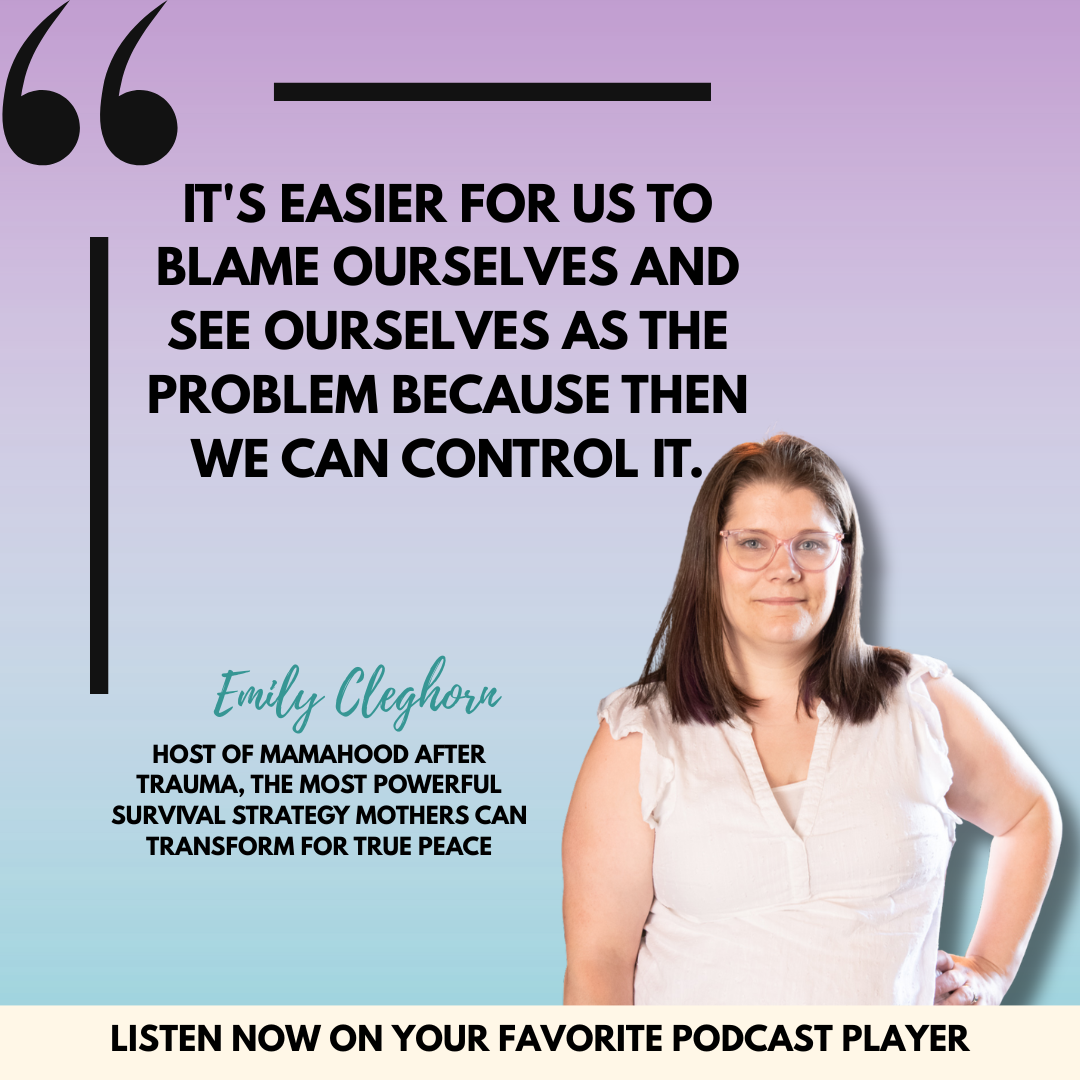
Emily’s personal story illustrates how self-blame becomes deeply ingrained:

  • Early Conditioning:
    • As a child, Emily learned to track her stepbrother’s and father’s whereabouts to avoid danger. She also learned to suppress her own needs to keep the peace.

  • Emotional Responsibility:
    • Children in trauma often take on the emotional burdens of adults, believing that if they behave “just right,” they can prevent outbursts or maintain love.

How Self-Blame Manifests

  • Chronic Guilt:
    • A persistent feeling of being “in trouble,” even when nothing is wrong.

  • Over-Apologizing:
    • Saying sorry for things outside your control, or for simply existing.

  • Self-Neglect:
    • Prioritizing others’ needs to the point of ignoring your own well-being.

Actionable Tip:

When you catch yourself apologizing unnecessarily or feeling guilty, pause and ask: “Is this truly my responsibility, or am I carrying old patterns from childhood?”

The Cost of Survival Strategies in Adulthood

While hyper-awareness and self-blame may have kept you safe as a child, they come at a significant cost in adulthood:

  • Emotional Exhaustion:
    • Constant watchfulness drains your energy and leaves little room for joy or relaxation.

  • Relationship Strain:
    • Taking on too much responsibility can create imbalances in relationships, leading to resentment or burnout.

  • Stunted Self-Trust:
    • When you’re always doubting yourself or assuming blame, it’s hard to trust your own instincts and decisions.

Expert Insight:

Recognize that these patterns were adaptive in childhood but are maladaptive now. The first step to healing is acknowledging that you no longer need to rely on these strategies to stay safe.

Breaking the Cycle: Actionable Steps for Healing

Emily offers a powerful reframe: “Thank you, I’ve got this now.” This phrase honors the survival skills that once protected you, while signaling your readiness to move forward.

Steps to Break Free from Self-Blame and Hyper-Awareness

  • Acknowledge the Pattern:
    • Name the behaviours (hyper-awareness, self-blame, self-neglect) without judgement.

    • Understand their origins as survival mechanisms.

  • Practice Self-Compassion
    • Replace self-criticism with kindness. Remind yourself: “I did what I needed to survive.”

  • Set Boundaries
    • Learn to distinguish between your responsibilities and those of others.

    • Practice saying no or delegating tasks, even if it feels uncomfortable at first.

  • Seek Support
    • Healing is not a solo journey. Reach out to trauma-informed professionals, support groups, or communities like the Peace Pack Patreon group.

    • Consider heart-to-heart calls or therapy sessions for personalized guidance.

  • Celebrate Progress
    • Healing is incremental. Celebrate small wins, like recognizing a trigger or responding differently to a familiar situation.

Actionable Tip:

Choose one insight from this list and commit to practicing it this week. Healing happens one step at a time.

Building Community: The Power of Connection

Isolation is a common experience for trauma survivors, but connection is a powerful antidote.

  • Safe Spaces:
    • The Peace Pack’s private Patreon community offers a judgement-free zone for sharing and learning.

  • Shared Wisdom:
    • Hearing other’s stories can normalize experiences and provide new perspectives.

  • Mutual Support:
    • Giving and receiving support fosters resilience and hope.

Actionable Tip:
If you’re not ready to join a group, start by connecting with one trusted friend or mentor. Share a piece of your story and notice how it feels to be seen and heard.

Expert Advice: Moving Forward with Compassion

Emily’s approach is rooted in both lived experience and trauma-informed expertise. Her advice for mothers on this journey:

  • Honor Your Survival Skills:
    • They served you well, but you can now choose new ways of being.

  • Embrace Vulnerability:
    • Healing requires honesty, with yourself and others.

  • Stay Curious:
    • Notice your patterns with gentle curiosity, not harsh judgement.

  • Keep Showing Up:
    • Healing is hard work, but every step forward is a victory.

Actionable Tip:

Schedule a regular check-in with yourself. Reflect on your progress, challenges, and needs. Use journaling, meditation, or a trusted confidant to process your journey.

Final Thoughts: Healing Out Loud

Emily offers a call to action: “Mend the past so you can mama in peace.” Her message is clear: healing is possible, and you don’t have to do it alone.

  • Take One Insight:
    • Choose a takeaway from this conversation and let it guide your week.

  • Breathe and Reflect:
    • Give yourself permission to pause, breathe, and honor your progress.

  • Subscribe and Connect:
    • Stay engaged with the Mamahood After Trauma podcast for ongoing support, tools, and inspiration.

You are breaking cycles. You are rising with honesty. You are worthy of peace.

Resources:


Your healing matters. Your story matters. And you are not alone.