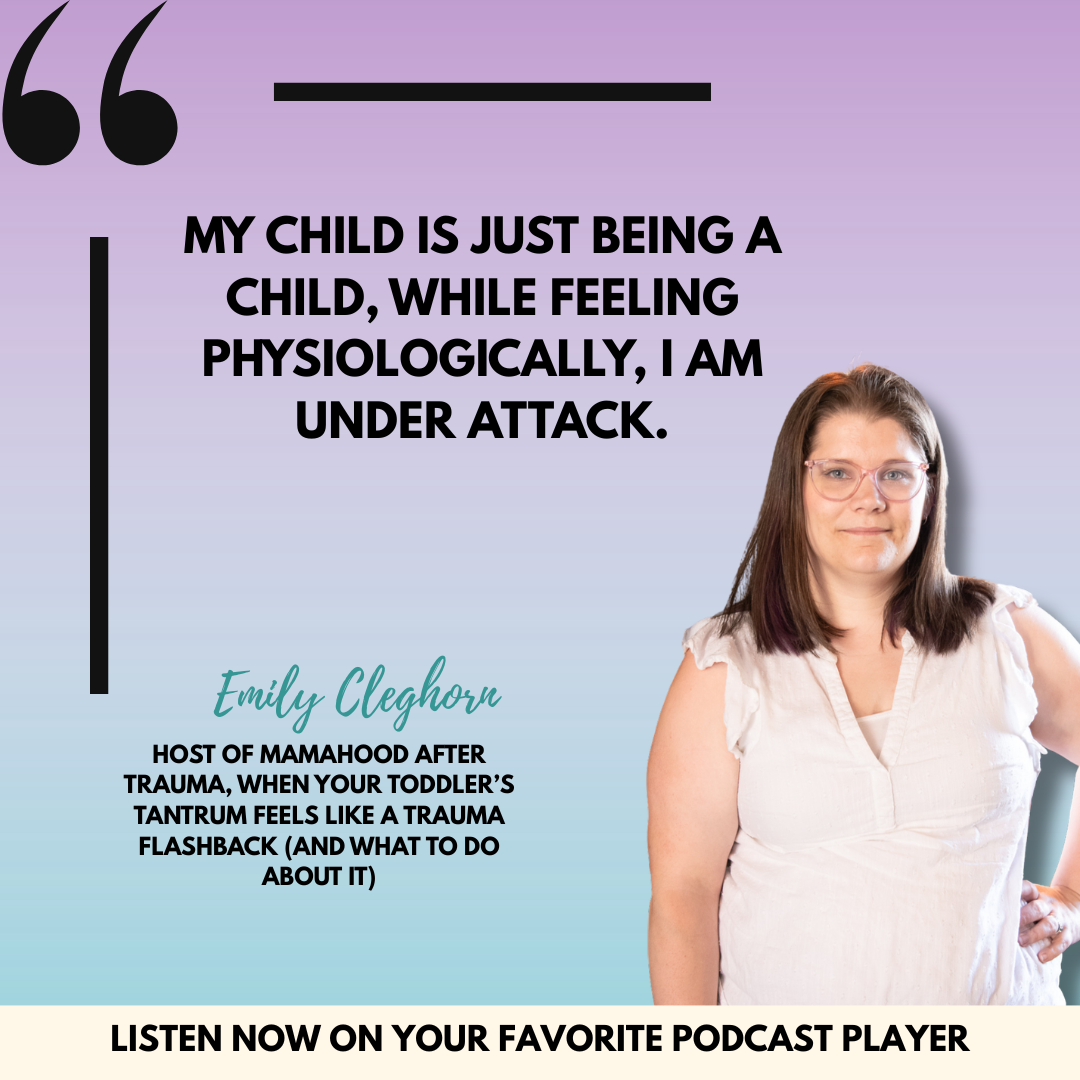
When Your Toddler’s Tantrum Feels Like a Trauma Flashback (And What to Do About It)


When Your Toddler’s Tantrum Feels Like a Trauma Flashback (And What to Do About It)

Intro

Welcome to Mamahood After Trauma, where healing happens in real time, right in the middle of motherhood. In this episode, Emily Cleghorn explores what it’s like to parent while still healing from trauma, especially when your child’s meltdowns feel unexpectedly triggering.

Understanding Parenting Through Triggers

The Reality: Healing Happens in the Messy Middle

  • Many resources focus on parenting after healing, but Emily emphasizes a crucial truth: most mothers are parenting while still in the process of healing. You don’t have to wait until you’re “fully regulated” or “healed enough” to be a good mom. The journey is ongoing, and it’s okay to be in the messy middle.

Key Insight:

Motherhood is a constant stream of triggers. Children push boundaries, express big emotions, and test limits that often activate old wounds and survival patterns in trauma survivors.

Why Triggers Happen: The Nervous System’s Role

Your Body Reacts Before Your Brain

  • When your child screams, resists, or melts down, your body may react as if you’re in danger, even when you logically know you’re not. This is your nervous system responding to the present through the lens of your past.

Nuanced Understanding:

  • Triggers are rarely about the present moment. Your child’s behaviour may be developmentally normal, but your body interprets it as a threat because of past experiences.

  • Examples:
    • If chaos once meant danger, your child’s tantrum may feel like an emergency.

    • If yelling meant punishment or abandonment, your child’s loudness may trigger panic or anger.

Reframing Triggers: From Self-Judgement to Self-Information

A Trigger Is Information, Not Identity

  • A triggered response is information, not identity. It’s not proof you’re a bad mom; it’s evidence your body learned survival patterns that can be rewired.

Actionable Advice:

  • Stop treating triggers as moral failures. Instead, see them as signals from your nervous system.

  • Ask yourself:
    • “What did this moment activate in me?”

    • “What story is my body telling?”

    • “What feels unsafe right now?”

  • This shift moves you from self-attack to self-awareness, which is the foundation of healing.

Practical Steps for Parenting Through Triggers

Pause and Name the Activation

  • When you notice yourself getting triggered- maybe your chest tightens, your jaw clenches, or your voice becomes sharper- pause and acknowledge what’s happening. Simply recognizing that you’re feeling triggered can help interrupt an automatic reaction and create space to respond differently.

  • In-Depth Tips:
    • Even if you still react, the pause matters. Awareness is the first step, not perfection.

    • Practice self-compassion: Remind yourself that being triggered is a normal response for trauma survivors.

Shift from Perfection to Progress

  • Healing isn’t about never being triggered again. It’s about increasing your awareness, repairing when needed, and recovering more quickly.

  • How to Measure Progress:
    • Awareness: Noticing triggers sooner.

    • Repair: Apologizing and reconnecting with your child after a rupture.

    • Recovery: Returning to calm more quickly after being activated.

Use Triggers as a Guide for Healing

  • Every trigger is an opportunity to learn about your nervous system and what it needs.

  • Reflective Questions:
    • What does my body need right now to feel safe?

    • Is this reaction about my child, or is it about my past?

    • How can I support myself in this moment?

Seek Support and Community

  • You don’t have to do this alone. Join Emily’s healing community- The Rising Room, where trauma-surviving mamas learn to regulate, heal triggers, and break generational cycles together.

  • Benefits of Community:
    • Shared understanding and validation.

    • Access to practical tools for nervous system healing and emotional regulation.

    • Ongoing support for real-life motherhood challenges.

Expert Recommendations for Trauma-Surviving Mamas

Build Your Toolbox for Regulation

  • Grounding Techniques: Practicing deep breathing, grounding exercises, or sensory resets when you feel triggered.

  • Routine Self-Check-Ins: Regularly ask yourself how you’re feeling and what you need.

  • Repair Conversations: Normalize apologizing to your child and modeling healthy emotional repair.

Take the Next Step in Your Healing

  • Take Emily’s free “Find Your Next Step to Calm and Healing” quiz to help you identify where you are in your journey and what support might be most helpful. This is a practical way to get personalized guidance and move forward with confidence.

Final Thoughts: Awareness Is Where Healing Begins

  • You are not failing because you’re triggered. You are learning, growing, and breaking cycles- often in the most challenging circumstances. Remember, healing is not about perfection; it’s about awareness, repair, and recovery.

Resources:

Mend the past so you can mama in peace. If this resonated with you, know that you are not alone. Healing is possible, and every step forward matters.