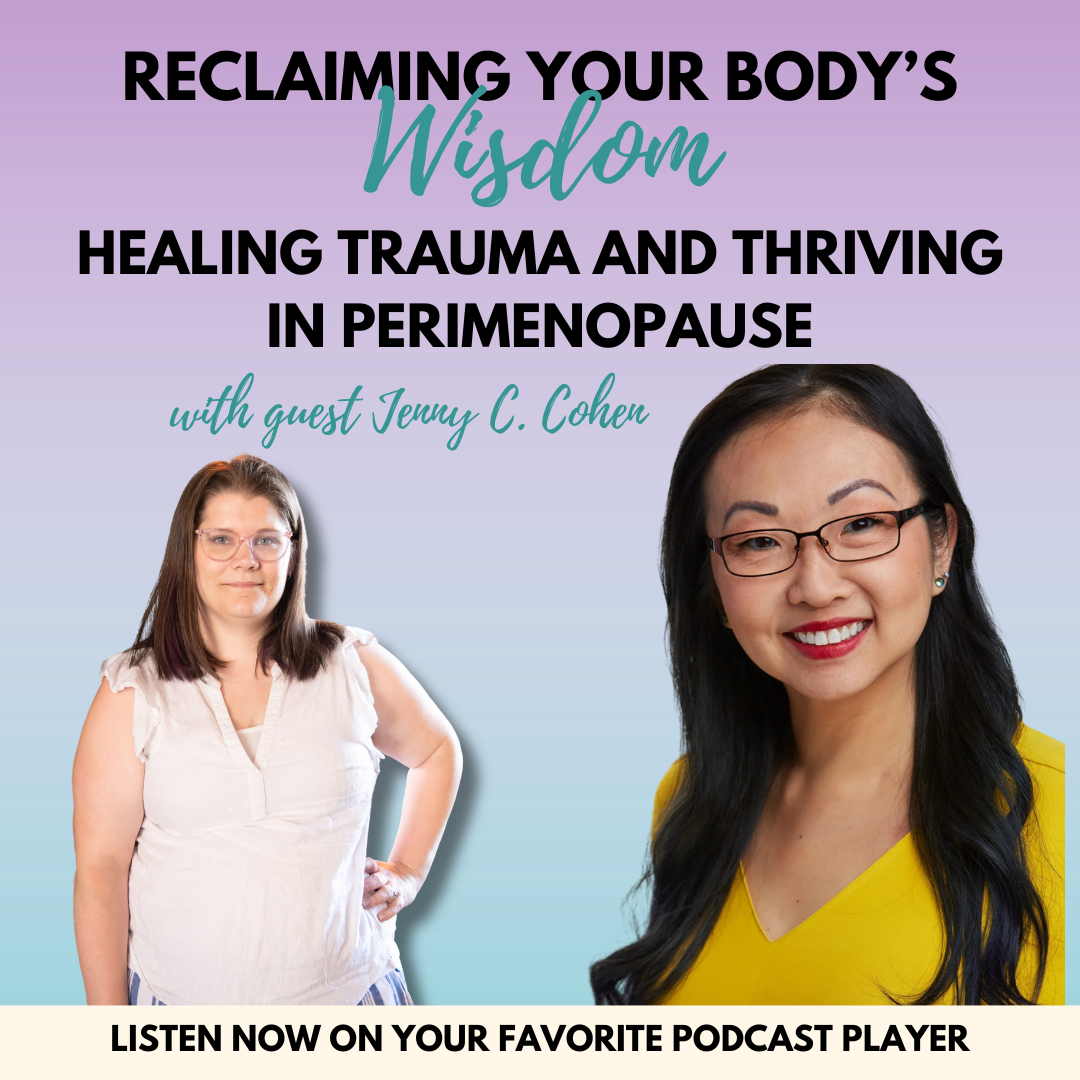
Reclaiming Your Body’s Wisdom: Healing Trauma and Thriving in Perimenopause


Reclaiming Your Body’s Wisdom: Healing Trauma and Thriving in Perimenopause

Intro:

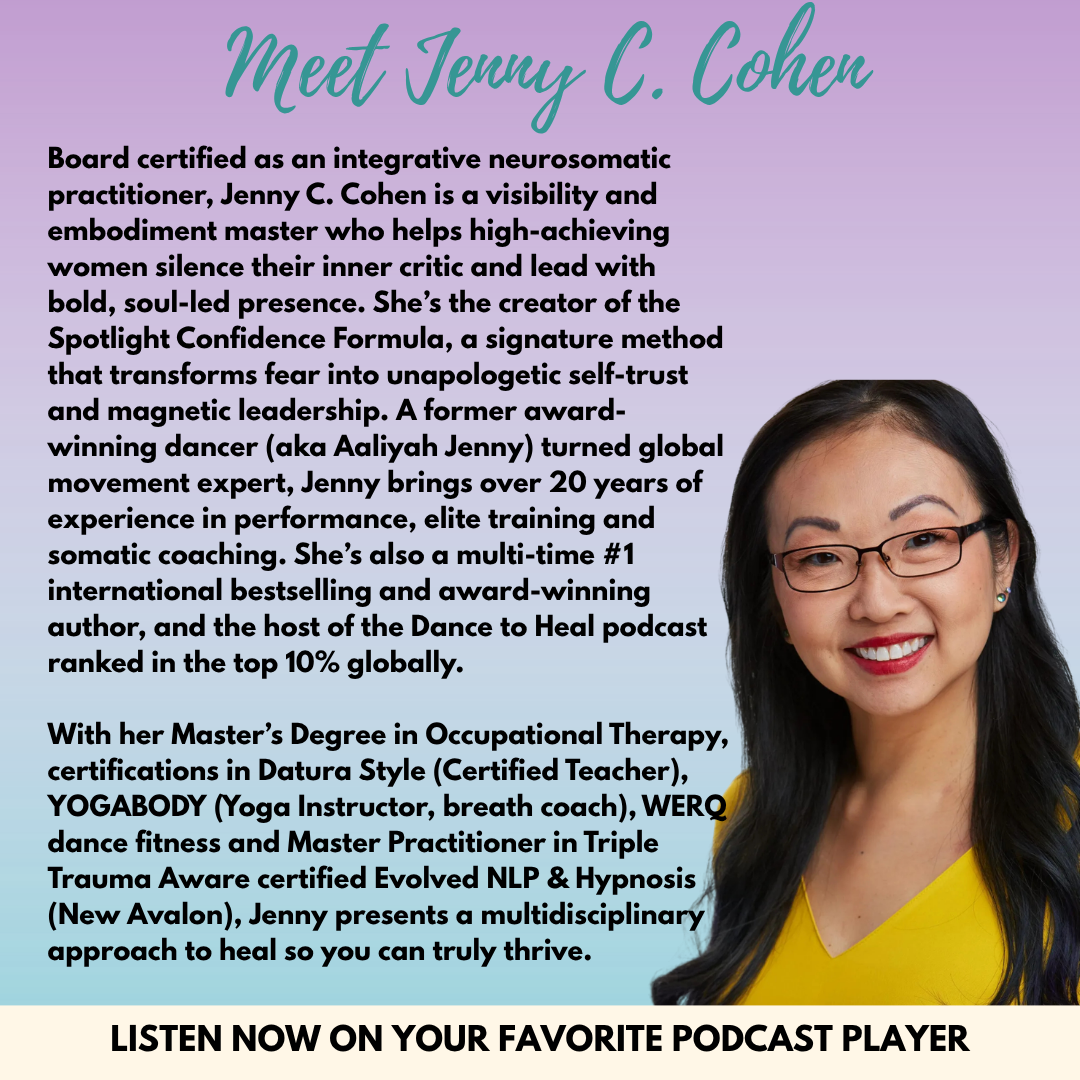
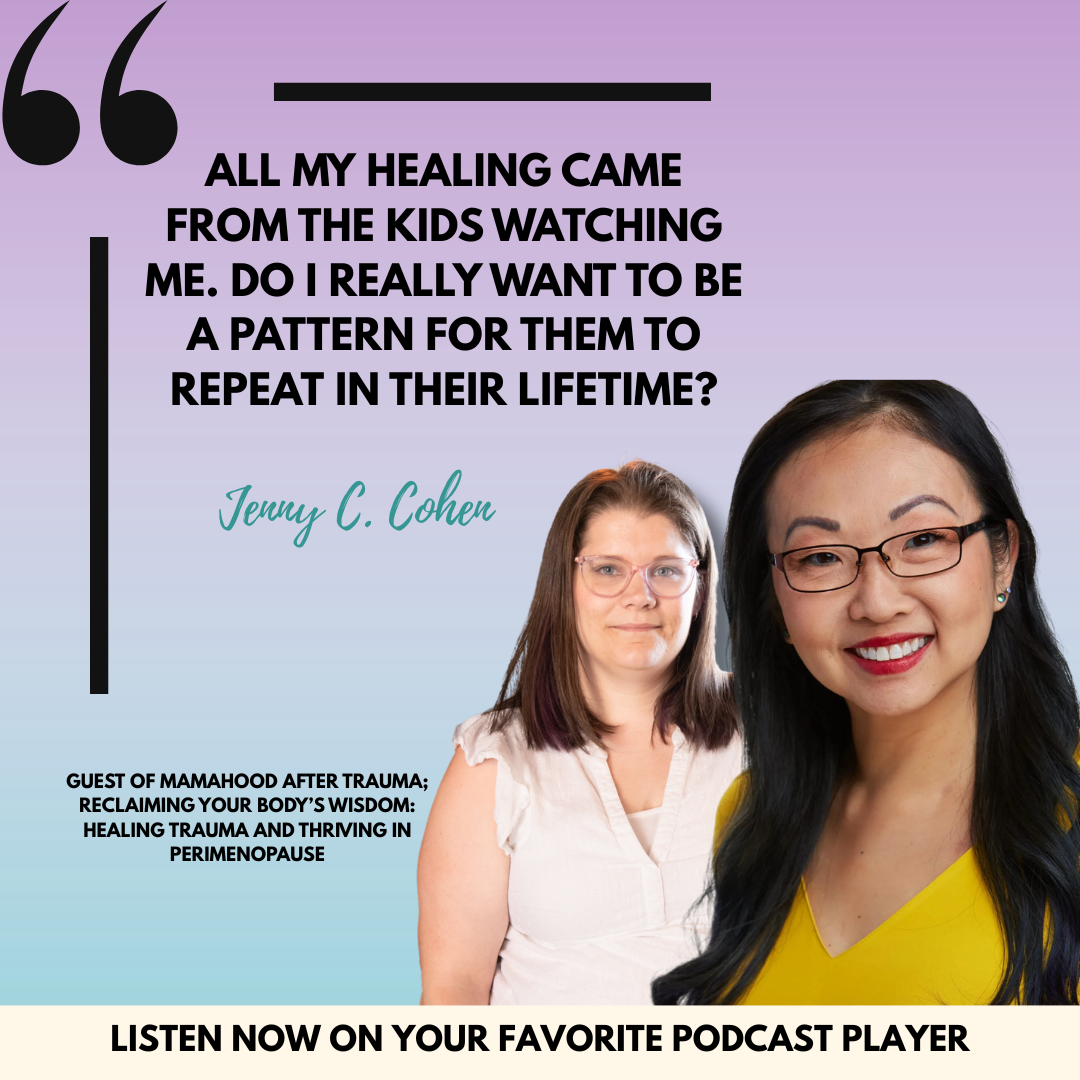
Perimenopause can be a challenging season, especially for women carrying the effects of unresolved trauma. In this episode of Mamahood After Trauma, Jenny Cohen shares her powerful story of resilience and practical insights for reconnecting with your body, quieting your inner critic, and embracing healing through movement, awareness, and self-compassion. Whether you're navigating motherhood, trauma recovery, or the changes that come with midlife, this conversation offers hope and practical next steps toward healing.

The Power of Lived Experience in Healing

Jenny Cohen’s journey is a testament to the complexity and strength of motherhood after trauma. Her story underscores a crucial truth: healing is not linear, and it’s deeply personal. Jenny’s experiences with infertility, cancer, and parenting children with trauma and gender transition have shaped her approach to supporting other women.

Key Takeaways:

    • Your story matters. The challenges you’ve faced are not weaknesses. They are sources of wisdom and empathy.

    • Healing is ongoing. Even after major milestones (like cancer recovery), new challenges can arise that require deeper presence and self-compassion.

    • You are not alone. Many mothers carry unprocessed pain from their own childhoods, which can impact how they parent.

    Understanding Disconnection: Why Trauma Survivors Live in Their Heads

    A central theme in Jenny’s work is the disconnection many women feel from their bodies, especially those with trauma histories. This disconnection is both a survival mechanism and a barrier to healing.

    Nuanced Insights:

    • Living in the “top 5%”: Many women operate almost entirely from their heads, ignoring the 95% of their body below the shoulders.

    • Undiagnosed neurodiversity: Conditions like complex PTSD, ADHD, and other forms of neurodiversity often go unrecognized, further complicating the mind-body split.

    • Conditioning: Society teaches women to ignore their bodies’ signals, leading to a loss of intuitive self-care.

    Expert Advice:

    • Awareness is the first step. Notice when you’re “checked out” or ignoring your body’s needs.

    • Your body holds wisdom. Memories, emotions, and needs are stored in the body, not just the mind.

    Reconnecting with Your Body: Movement as Medicine

    Jenny’s approach to healing centers on movement as a bridge between mind and body. She emphasizes that dance and movement are not about performance, but about presence and play.

    Actionable Tips for Reconnection:

    • Redefine Dance:
      • It’s not about choreography or skill. If you can walk, you can dance.

      • Movement can be as simple as swaying, walking, or even visualizing movement if physical activity isn’t possible.

    • Use Sound as a Catalyst:
      • Move to music, the sound of water, or birdsong—whatever evokes safety and calm for you.

    • Make it playful:
      • Give yourself permission to move without judgement. Let your body guide you.

    • Start Small:
      • Schedule intentional movement time, even if it’s just a few minutes a day.

    • Notice the Effects:
      • Pay attention to how you feel before, during, and after movement. Journal about it to deepen your awareness.

    Why This Works:

    Movement helps calm the nervous system, rebuilds body awareness, and fosters intuition. It’s a direct way to “listen” to your body’s needs and signals.

    Taming the Inner Critic: Internal Family Systems and Self-Compassion

    Jenny highlights the relentless nature of the inner critic, often internalized from caregivers or societal expectations. This voice can become an “internal abuser,” undermining self-worth and perpetuating trauma.

    In-Depth Strategies:

    • Recognize the Source:
      • Identify whose voice your inner critic echoes (e.g., a parent, teacher, or societal message).

    • Understand Internal Parts:
      • Internal Family Systems (IFS) therapy teaches that under stress, parts of us “fracture off” to protect us, with some stuck in the past and others acting as protectors (anger, judgement).

    • “Fire” Toxic Voices:
      • Consciously decide to let go of internalized toxic messages that no longer serve you.

    • Practice Self-Compassion:
      • Speak to yourself as you would to your child or best friend.

      • Give yourself grace for not “having it all together.”

    Expert Insight:

    The myth that women must “do it all” is just that—a myth. Healing involves accepting imperfection and prioritizing self-care.

    The Importance of Play and Presence

    Play is not just for children. Jenny urges mothers to reclaim play for themselves as a path to healing and presence.

    How to Reintroduce Play:

    • Take a Class:
      • Dance, art, or improvisation classes can reignite creativity and presence.

    • Try Improvisation:
      • Improv games, rooted in saying “yes” and reacting in the moment, foster spontaneity and connection.

    • Explore New Hobbies:
      • Stand-up comedy, voiceover work, or any playful activity can help you reconnect with joy.

    • Be Present:
      • Play requires you to be in the moment, which is deeply healing for trauma survivors.

    Why Play Matters:

    Play reduces stress, builds resilience, and models healthy self-expression for your children.

    Cultivating Safety and Awareness for Yourself and Your Children

    Jenny’s experiences as a mother of children who have transitioned genders and faced trauma highlight the importance of vigilance, presence, and safety.

    Practical Safety Tips:

    • Model Presence:
      • Avoid multitasking when out in public; perpetrators often target those who appear distracted.

    • Teach Body Language:
      • Help your children understand how to project confidence and awareness.

    • Discuss Realities:
      • Have open conversations about societal dynamics, especially if your children are navigating marginalized identities.

    • Empower, Don’t Scare:
      • Awareness is about reclaiming power, not living in fear.

    Expert Perspective:

    Cultivating presence is not just self-care; it’s a protective factor for you and your family.

    Practical Steps to Begin Your Healing Journey

    Ready to start? Here are concrete, actionable steps inspired by Jenny’s work:

    1. Schedule Intentional Movement
      1. Block out time for dance or free movement.

      2. Let your body lead. No judgement, no performance.

    2. Reclaim Play
      1. Sign up for a class or try a new hobby just for fun.

      2. Invite spontaneity and creativity into your daily life.

    3. Practice Daily Gratitude
      1. Acknowledge both the burdens and blessings in your life.

      2. Use gratitude to shift perspective, not to minimize your struggles.

    4. Tune Into Your Body’s Signals
      1. Pause throughout the day to check in: Are you thirsty? Hungry? Tired?

      2. Respond to these cues with care.

    5. Challenge Your Inner Critic
      1. Notice negative self-talk and question its origin.

      2. Replace harshness with kindness and understanding.

    6. Try the 100 Days Dance Challenge
      1. Pick a song, dance daily, journal before and after, and watch yourself with compassion.

      2. Focus on what you love about your movement, not what you want to “fix.”

    Resources and Next Steps

    Jenny Cohen’s Offerings:

    • Move to Bloom Masterclasses:
      • Free monthly sessions on reconnecting with your body through movement. movetobloom.com

    • VIP Support:
      • Extra support for busy moms who need flexibility.

    • Daily Trust Connection:
      • Follow Jenny Z. Cohen on Instagram and Facebook for daily prompts and inspiration.

    Emily Cleghorn’s Free Quiz: